



IA2 Archives refers to the archives for which the IA2 group manages the entire lifecycle of scientific and observational data downstream of their acquisition, ensuring long-term preservation and secure storage. The infrastructure provides the global astronomical community with regulated and unified access through dedicated web interfaces and standardized protocols.
A fundamental pillar of our activity is the rigorous adoption of the FAIR principles (Findable, Accessible, Interoperable, Reusable) and compliance with international Virtual Observatory (VO) standards. This goal is pursued through meticulous engineering, modeling, and harmonization of metadata and formats—applied to both new acquisitions and historical data—to guarantee full system interoperability, preserve observational heritage, and maximize the scientific return of observations over time.
Below is a list of all the archives currently managed by the IA2 group, along with links to their respective portals:2.
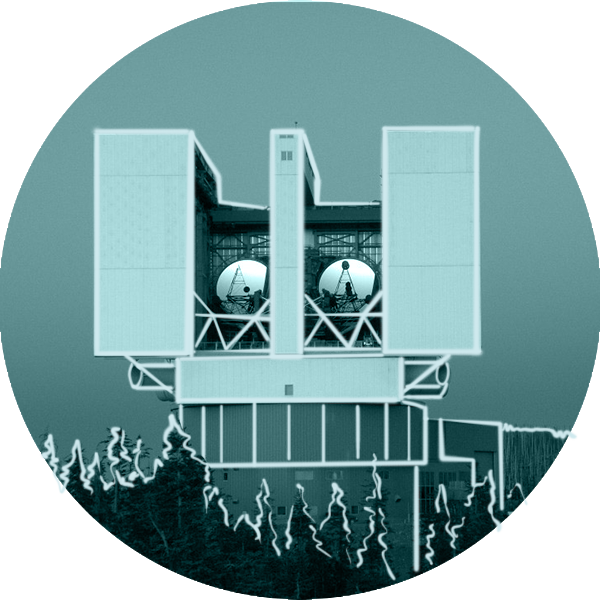
LBT Archive
Go to portal
The Large Binocular Telescope (LBT) is located at the Mount Graham International Observatory (MGIO) in the Pinaleño Mountains of southeastern Arizona, United States. Situated at an altitude of 3,221 meters, it stands within the Coronado National Forest, about 40 km southwest of the city of Safford.
The telescope is operated by a major international collaboration, in which Italy—thanks to INAF—is one of the primary partners with a 25% share of observation time. The coordination of Italian activities is directly led by INAF, while the observatory headquarters (LBTO) is located in Tucson, at the University of Arizona.
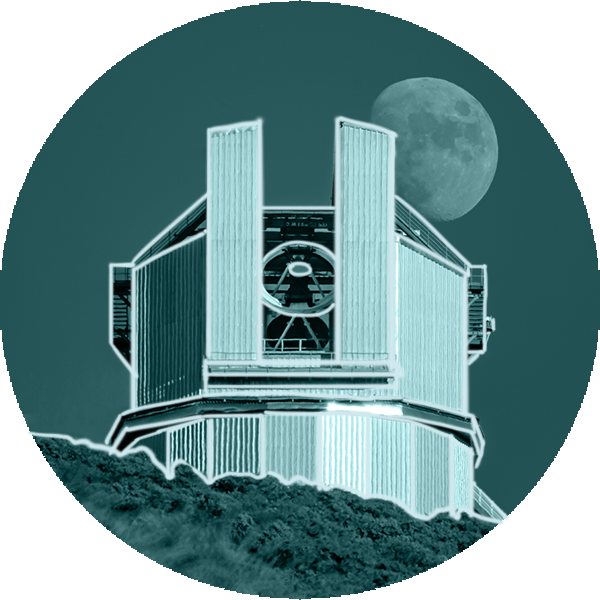
TNG Archive
Go to portal
The Telescopio Nazionale Galileo (TNG) is located at the Observatorio del Roque de los Muchachos (ORM) on the island of La Palma, in the Canary Islands archipelago, Spain. Situated at an altitude of 2,387 meters, it sits on the rim of the Caldera de Taburiente volcano in one of the best observational sites in the world.
The telescope, equipped with a 3.58-meter primary mirror, is the main facility for optical and infrared astronomical research fully owned by the Italian scientific community. INAF directly manages 75% of the observation time through the Fundación Galileo Galilei, while the remaining 25% is available to the Spanish and international astronomical community.

Asiago Archive
Go to portal
The Asiago Astrophysical Observatory is located on the Sette Comuni Plateau in the province of Vicenza, within the Venetian Prealps. The main facility at Cima Ekar, situated at an altitude of 1,366 meters and managed by the National Institute for Astrophysics (INAF) in collaboration with the University of Padua, houses the Copernico telescope. With its 1.82-meter mirror, it represents the largest optical instrument on Italian soil.
The center represents a historical excellence for Italian astronomy and is active in both scientific research and public outreach. Observational activities and the management of scientific databases involve direct cooperation between the INAF – Astronomical Observatory of Padua and the Department of Physics and Astronomy of the University of Padua, making the archive a reference point for the study of stellar and extragalactic physics.
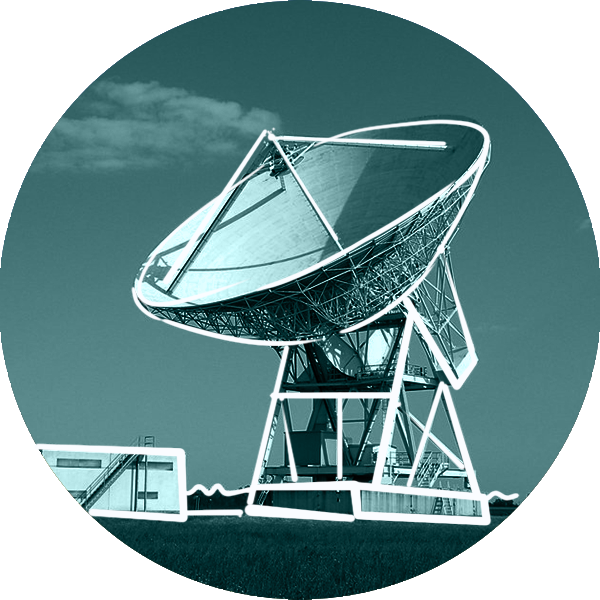
Medicina/Noto Radio Archive
Go to portal
The radio astronomy stations of Medicina (Bologna) and Noto (Syracuse) form the historical backbone of Italian ground-based radio astronomy. The Medicina Station is located in the Emilian plain, about 25 km from Bologna, and houses the 32-meter dish antenna alongside the "Northern Cross" interferometric radiotelescope. The Noto Station is located in Contrada Renna, on the Hyblaean hills in Sicily, and is equipped with a twin 32-meter dish antenna.
Both facilities are managed by the INAF – Institute of Radio Astronomy (IRA) and operate both in single-dish mode and within network configurations. The two dishes provide an essential contribution to international Very Long Baseline Interferometry (VLBI) networks, regularly collaborating with the European VLBI Network (EVN) and the global system for research ranging from the study of cosmic radio sources to geodesy.
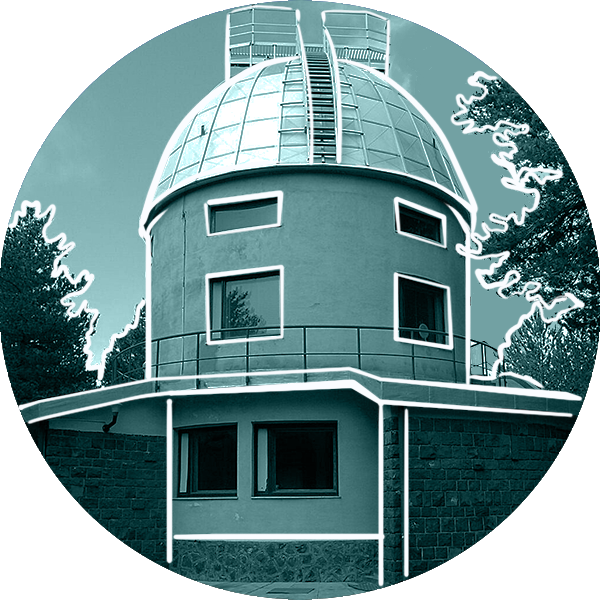
Serra La Nave Archive
Go to portal
The Serra la Nave Observational Station is located on the southern slopes of Mount Etna, in the municipal territory of Ragalna (Catania), within the Etna Park. Situated at an altitude of 1,735 meters, the facility enjoys a privileged position that guarantees clear and crisp skies, ideal for astronomical observations in the optical and infrared bands.
The station is managed directly by the INAF – Astrophysical Observatory of Catania and houses, among other instruments, the 91 cm MVT (MCT Telescope) robotic telescope and the facilities of the ASTRI project. The structure constitutes a key hub for the study of solar and stellar physics, Near-Earth space monitoring (Space Weather), and support for international astrophysical missions.

SVAS
Go to portal
The IA2 center supports the technological and storage infrastructure for SVAS (Le Stelle Vanno a Scuola / "Stars Go to School"), the educational and outreach program of the INAF – Astronomical Observatory of Trieste. The project allows students and teachers to conduct real-time observation sessions by remotely controlling the robotic telescopes at the Basovizza Station. Students experience the full research workflow: planning targets, managing the CCD camera, and acquiring data, which is then fed into the dedicated archive.
As shown in the papers and publications by Dr. Giulia Iafrate—head of SVAS instrumentation and coordinator of international educational initiatives—the added value of this infrastructure lies in its integration with the Virtual Observatory (VO). Thanks to resources developed by the team (such as dedicated educational portals and EuroVO frameworks), archive data is not merely static files, but becomes the foundation for interactive pedagogical units.
In this way, IA2 and the SVAS project enable students to manipulate and explore astronomical images using the same standards and software as the global scientific community, transforming the archive into a powerful tool for scientific literacy.
SIMULATION ARCHIVES

EXOCLIMATES
Go to portal
The Exoclimates catalog is a thematic and theoretical archive curated by INAF, entirely dedicated to the study and characterization of extrasolar planet atmospheres. Unlike traditional observational archives, this facility collects extensive simulated datasets, complex climate models, and libraries of synthetic transmission and emission spectra for various exoplanet types.
The archive is hosted and managed by the IA2 center, which handles its organization and accessibility in accordance with FAIR principles (Findable, Accessible, Interoperable, Reusable). By adopting Virtual Observatory (VO) protocols, Exoclimates allows researchers to instantly compare theoretical simulations with real observational data, providing vital support for interpreting results obtained from major space missions dedicated to exoplanets.
INTRIGOSS
Go to portal
INTRIGOSS is INAF's theoretical database dedicated to the publication and consultation of extensive grids of synthetic stellar spectra. The archive provides the international astrophysical community with a vast library of high-resolution atmospheric models, essential for calibrating and determining the physical parameters and chemical abundances of observed stars.
Managed and hosted by the IA2 center, the system integrates an interactive web interface that allows users to explore and filter spectra based on fundamental parameters such as effective temperature, surface gravity, and metallicity. Thanks to full integration with Virtual Observatory protocols (including the Simple Spectral Access Protocol – SSAP), INTRIGOSS ensures complete interoperability, allowing theoretical models to be directly overlaid onto real data within astronomical analysis software.